

Ceiling mould is a common issue in UK homes, particularly in areas where moisture levels rise regularly like kitchens and bathrooms. There are many effective ways to get rid of ceiling mould permanently through a combination of cleaning and managing the causes of moisture in problem areas.
Ceilings are where warm, moisture laden air naturally rises and condenses, allowing mould spores to thrive if conditions are right.
This guide explains how to remove mould from ceilings effectively using natural products, why mould often keeps coming back, and the steps you should consider to help prevent it from returning permanently.
Does Bleach Kill Ceiling Mould?
Bleach does not kill mould effectively, and is rarely the best option when you wish to eradicate ceiling mould. Using a bleach spray will make your ceiling look better, but will not reliably kill all spores.
For permanent ceiling mould removal, treatments that both eliminate mould and measures that support long term prevention are far more effective than cosmetic stain removers.
Best Way to Remove Ceiling Mould Permanently
The best way to remove ceiling mould permanently is using natural products which will kill the spores rather than hiding them with bleach.
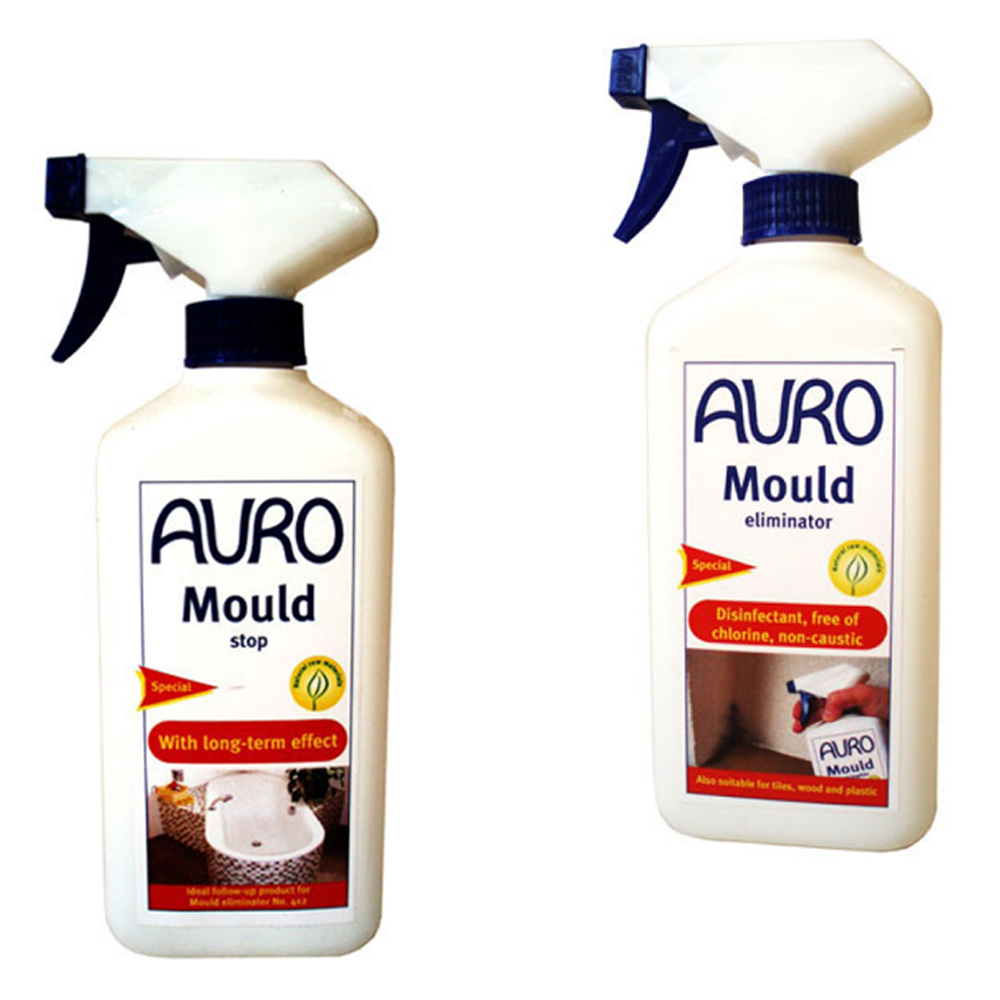
Our recommended natural ceiling mould remover uses a highly effective two stage process. Step 1 kills mould spores and step 2 helps to prevent future spore regrowth.
Before You Remove Mould from a Ceiling
Before cleaning mould off a ceiling, it is important to assess the surface and prepare properly.
Identify the ceiling finish first. Painted ceilings, wallpapered ceilings and textured or decorative plaster can all respond differently to cleaning products, a small spot test is advisable before you begin.
Because ceilings are overhead surfaces, personal protective equipment is important. Wear gloves, eye protection and a suitable mask, and ensure the room is well ventilated. Spraying products upwards increases the risk of inhalation or splashes, so care is required throughout the process.
Step 1: Kill and Remove Mould with AURO 412 Mould Eliminator
AURO 412 is a chlorine free mould eliminator suitable for painted ceilings, plaster, tiles, wood and plastic.
- Ventilate the room thoroughly.
- Spray AURO 412 directly onto the mouldy areas. A thorough coating should be applied to ensure no areas are missed.
- Leave it to soak for a minimum of one hour, ideally allow it to dry overnight to make removing mould residue afterwards easier.
- Gently remove loosened residue using a soft brush or sponge.
- Wipe the surface clean once the mould has broken down.
This first step removes active mould and destroys spores without releasing strong chemical fumes into your home.
Step 2: Prevent Regrowth with AURO 413 Mould Stop
Once the ceiling is completely dry, AURO 413 Mould Stop can be applied to reduce the risk of mould returning.
Auro 413 coats the ceiling with a natural mould growth inhibitor, helping to prevent further spore growth. The product should be sprayed onto the treated area and left to dry naturally. This preventative step is important to ensure long term mould free ceilings.
Why Ceiling Mould Keeps Coming Back
One of the most frustrating things about ceiling mould is that it often returns after cleaning. This usually happens because removing visible staining does not address the conditions that allowed mould to grow in the first place.
Cleaning alone is rarely enough to remove ceiling mould permanently. You should also identify the factors in your home contributing to mould growth, and take steps to deal with them.
- Warm, moist air rises and condenses on cooler ceiling surfaces.
- Poor insulation creates cold spots where condensation forms.
- Inadequate ventilation allows moisture to linger indoors.
Without tackling these issues, even the best mould remover for ceilings will only provide a temporary improvement.
Does Anti Mould Paint Help Prevent Ceiling Mould?
Yes, anti mould paint can be a useful preventative measure, but it is not a cure for existing mould and should never be applied over untreated growth.
Our range of natural anti mould paints are naturally mould resistant. All paints are lime based, with natural fungicidal and algicidal properties due to their alkalinity. Unlike anti mould paints with synthetic anti mould additives, lime paints will retain their anti mould properties for the lifetime of the finish. Synthetic chemical additives degrade over time, resulting in reduced effectiveness.
- All mould has been removed and treated.
- The underlying moisture causes have been addressed.
- The ceiling surface is sound and fully dry.
Used as part of a wider approach, it helps reduce the risk of future ceiling mould in vulnerable areas.
Ceiling Mould in High Moisture Areas
Ceiling mould most often develops in rooms where moisture levels rise regularly and warm air accumulates. Bedrooms, bathrooms and kitchens are all considered high moisture areas, but for different reasons. Understanding how each contributes to excess moisture, and taking steps to mitigate is essential for permanent ceiling mould removal.
Bedroom Ceiling Mould
Bedrooms are frequently underestimated as high moisture spaces. During sleep, significant water vapour is released into the air, and when windows remain closed overnight, humidity levels can rise quickly.
If bedroom ceilings are cold or poorly insulated, condensation can occur repeatedly, creating ideal conditions for mould growth. Because exposure happens over prolonged periods during sleep, resolving bedroom ceiling mould permanently is especially important.
Bathroom Ceiling Mould
Bathrooms are one of the most common places for ceiling mould. Steam from baths and showers rises rapidly and condenses on ceilings, often before extractor fans can remove it effectively.
Regular cleaning alone will not prevent mould returning if ventilation is inadequate. Moisture must be extracted fully, and ceilings need to be properly treated once mould is removed.
Kitchen Ceiling Mould
Cooking generates large volumes of warm, moist air. If cooker hoods are ineffective or not used consistently, this moisture accumulates at ceiling level.
Rapid temperature changes and frequent bursts of humidity make kitchen ceilings particularly prone to mould, especially during colder months. As with other rooms, permanent removal relies on both surface treatment and moisture control.
How to Stop Mould Returning on Ceilings
- Ventilate rooms properly using short periods of full window opening rather than permanent window tilting.
- Run extractor fans until moisture has fully cleared.
- Maintain even heating to reduce cold ceiling surfaces.
- Insulate roof spaces where possible to limit condensation.
- Aim to keep indoor humidity down. Consider using a dehumidifier.
- Make sure that any persistent damp patches don’t have an exterior source, or that you don’t have any plumbing issues that need rectified.
Ceiling Mould FAQs
Can you paint over ceiling mould?
No. All mould must be removed and treated first, or it will return beneath the new coating.
Why does mould keep coming back on my ceiling?
Recurring mould usually indicates ongoing moisture, condensation or ventilation problems.
Is black mould on the ceiling dangerous?
Black mould can affect indoor air quality and should always be treated promptly.