

Clay paint is a highly breathable coating. It has hydroscopic properties which means it absorbs moisture from the air when it’s wet, and releases it when the air is dry. In practise, clay paint allows water vapour to pass through its surface easily, rather than trapping moisture within the wall. This is particularly important in older properties, where solid walls and lime plaster need breathable finishes to manage moisture effectively.
Paint breathability is determined by SD values. Clay paint sits firmly within SD Class 1, the highest level of breathability used to classify paints.
What Does Sd Value Mean In Paint?
Sd value is a measure of how resistant a material is to water vapour. When purchasing a breathable paint, it’s important to understand what SD values mean. This will help you determine if the paint is suitable for your needs.
- A lower SD value means moisture can pass through easily.
- A higher SD value means the material is more resistant to vapour movement.
Paints are grouped into breathability classes based on these values:
- SD Class 1 – Highly breathable – 0 to 0.14 m
- SD Class 2 – Moderately breathable – 0.14 to 0.5 m
- SD Class 3 – Limited breathability – 0.5 to 1.5 m
- SD Class 4 – Low breathability – 1.5 m+
With SD values around 0.015 to 0.02 m, clay paint sits at the very low end of SD Class 1, meaning it offers extremely high vapour permeability, or breathability, compared to most conventional paints.
What is The SD Value Of Clay Paint?
How low is low? Modern clay paints consistently achieve very low Sd values. Here’s a look at the performance of the paints we stock.
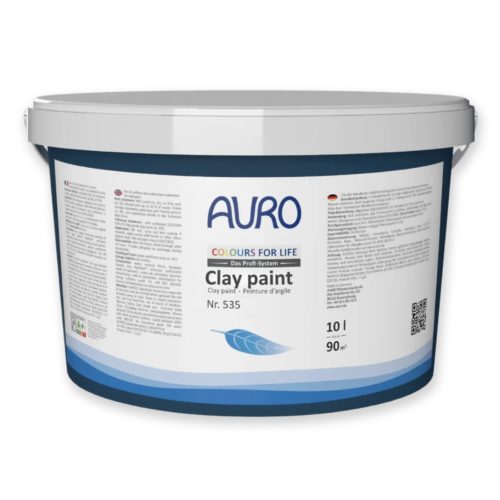
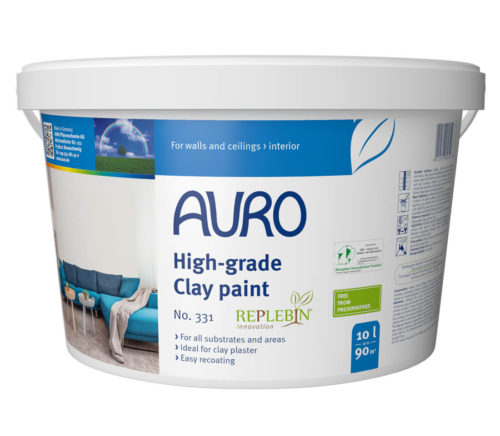
- Auro clay paints: 331 white & 535 coloured have an Sd value of less than 0.015 m.
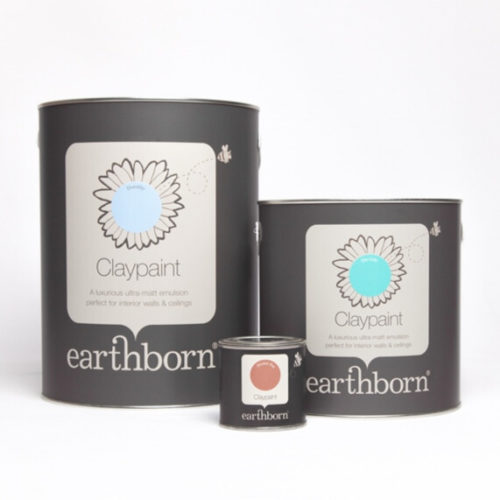
- Earthborn Claypaint has an Sd value of around 0.02 m.
Both of these natural paint brands sit well within SD Class 1, and importantly, at the extreme low end of that range.
The upper limit of SD Class 1 is 0.14 m, meaning clay paints are many times more vapour permeable than the threshold required to qualify as “highly breathable”.
Clay Paint Properties – How Does it Work?
Clay paint does more than just regulating moisture. It actively supports a balanced indoor environment, creating better air quality within your home.
What are the unique properties of this natural paint type?
Moisture Regulation
Clay paint is hygroscopic, meaning it can absorb and release moisture from the air. The paint:-
- Helps stabilise indoor humidity levels.
- Reduces condensation forming on wall surfaces.
- Allows moisture within walls to evaporate naturally.
Rather than trapping moisture, which can cause damage to the fabric and decor of your home, clay paint allows the wall to breathe.
Damp & Mould Reduction
Because clay paint is highly vapour permeable:
- Moisture is less likely to become trapped behind the paint layer
- Surfaces are less prone to persistent dampness
- Conditions that encourage mould growth are reduced
Clay paint supports moisture balance, but it does not fix the underlying cause of damp.
If areas of your home have particularly severe mould issues we’d suggest looking at one of our lime based natural anti mould paints. These are particularly suitable for high moisture areas like kitchens and bathrooms where clay paint may not perform as well.
Indoor Air Quality
Clay paints are typically formulated with natural ingredients and contain negligible VOCs. VOC free is a highly regulated term within the paint industry, and it’s generally not allowed for paint manufacturers to claim this on product packaging.
Clay paint has:-
- No acrylic or plastic binders
- No synthetic chemical emissions
- Naturally anti static properties, reducing dust attraction
This contributes to a cleaner and more stable indoor air environment, particularly in enclosed living spaces. Clay paint is often recommended for asthma or dust allergy sufferers.
We also stock a comprehensive range of almost zero voc paints.
Where to Use Clay Paint?
Clay paint is best suited to interior walls and ceilings. It performs best in living rooms, bedrooms and offices. Very damp areas may cause discolouration to the finish, so clay paint is not always suitable for kitchens and bathrooms that suffer from a lot of condensation.
This paint type performs best when used on the following substrates and living areas:-
- Lime plaster – Maintains vapour permeability in traditional wall systems
- Solid walls – Allows moisture to move freely through the structure
- Bedrooms and living areas – Supports healthy indoor air quality
- Ceilings – Particularly in older homes prone to condensation
- Previously painted surfaces – As long as they are sound and stable
It is particularly well suited to older and period properties, where breathable materials are essential.
Clay Paints Vs Other Breathable Paint Types
Clay paint is not the only breathable finishes available within the natural paint market. There are differences in performance and durability.
- Clay paint – Very high breathability (SD Class 1, extremely low Sd values).
- Limewash – Ultra breathable, but more traditional with trickier application and less durable.
- Lime paint – Very breathable with added durability.
Clay paint sits within the highest category of breathable interior finishes, while remaining easier to apply than traditional lime based coatings.
Clay Paint – Highly Breathable, Natural & Non Toxic
Clay paint is one of the most breathable interior paints available, with Sd values typically around 0.015 to 0.02 metres.
This places it firmly within SD Class 1, and at the very top end of that category in terms of vapour permeability.
As a result, clay paint allows moisture to pass through walls easily, supports healthy indoor air, and is particularly well suited to older buildings and breathable wall systems.
Need advice about how clay paint might work within your home? Contact us, we’ll be happy to help.