

Wooden worktops are the heart of a kitchen. They add warmth, character, and create a stunning natural look in both modern and traditional kitchens.
Because of their use in food prep, the finish you choose matters. The best food safe kitchen worktop oil needs to be durable and safe around food once fully cured.
In this guide we explain what “food safe” really means, which oils you should not use in a food preparation area, and which worktop oils offer the best balance of safety, durability and natural ingredients.
What Makes A Worktop Oil Food Safe?
When we talk about food safe worktop oils, we are not just considering whether a finish passes certification once cured. Natural finishes and good indoor air quality is something Green Shop Paints is passionate about, we care about what is in the product and what is released into your home during application and drying.
Not all food safe oils are the same. Many products reach a food safe status only after curing, but differ significantly in how they are formulated and the chemicals they release during the drying process.
Oils based on natural ingredients typically offer:-
- Plant based oils such as hemp, tung and linseed.
- Simple, transparent ingredient lists.
- Low odour during application.
- Fewer concerns for use around children and sensitive individuals.
- A long tradition of use on food contact surfaces.
More conventional worktop oil formulations can contain:-
- Synthetic solvents or glycol ethers (for example methyl diglycol, listed in some safety data sheets with reproductive risk warnings).
- Additives to speed drying or improve flow.
- Stronger fumes during application and drying.
There’s a big difference between a product that ends up being food safe after releasing harsh chemicals into your home, and a product that achieves the same result with
Our Best Food Safe Kitchen Worktop Oils
Our best food safe kitchen worktop oils are low voc, contain natural wood oils, and are highly durable for use in high traffic areas.
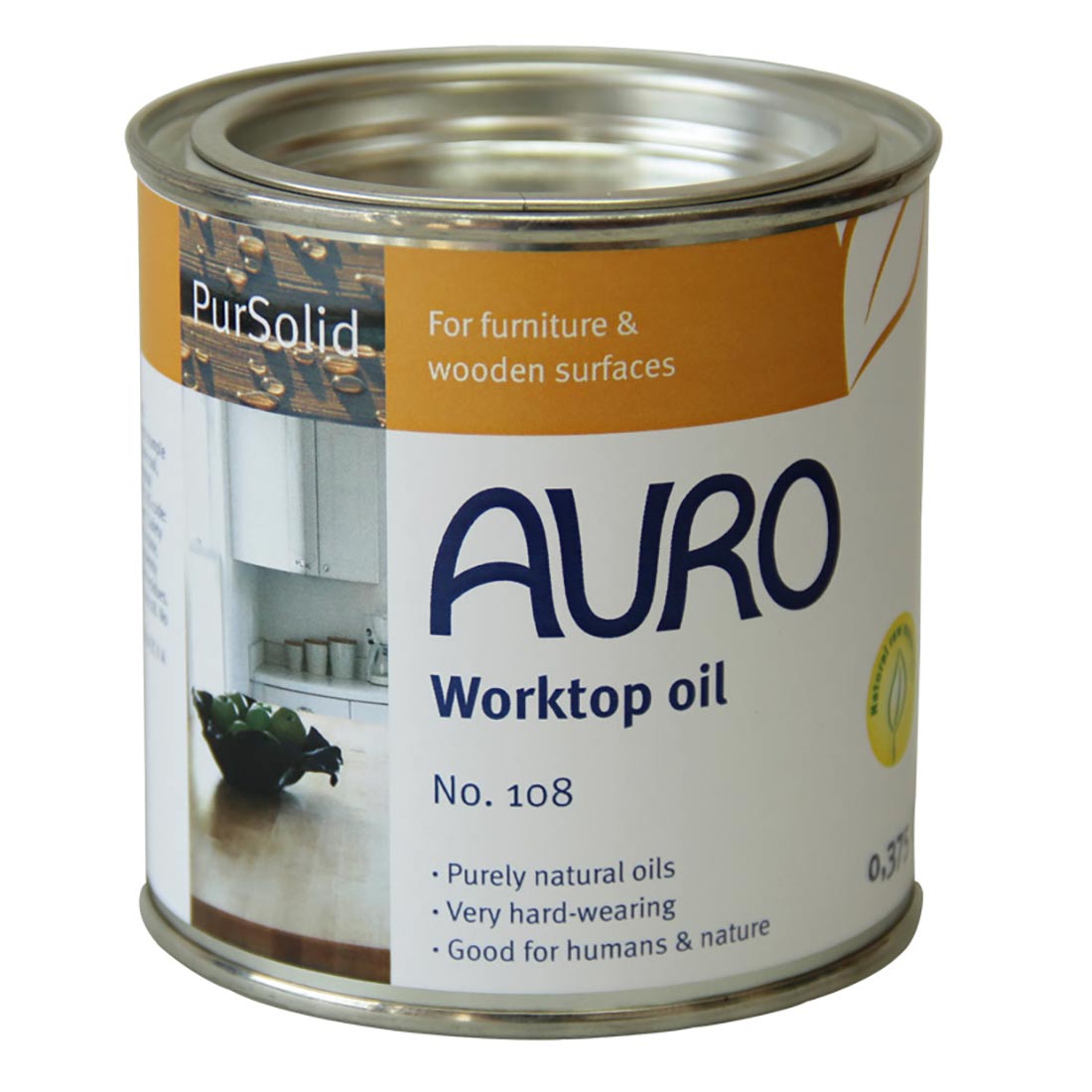
AURO Worktop Oil No. 108
Auro 108 is a solvent free blend of plant oils designed for interior wooden surfaces that see regular wear. It is tested to DIN EN 71 Part 3 (safe for toys), has very low VOC, and is intended specifically for worktops and similar surfaces. It produces a warm, natural finish and is a strong option for busy kitchens where durability matters.
Loxkin Organic Hemp Oil
Loxkin hemp oil is made from 100 percent UK grown organic hemp oil. This is the simplest ingredient option and appeals to people who want the most natural finish possible. It gives a soft, matte look and is described by Loxkin as a food safe wood finish once cured, although it is not a food product for consumption. Best suited to lighter use areas or for people happy to re-oil more regularly.
Why Oil Is So Popular For Wooden Worktops
Oil remains one of the most popular finishes for solid wood worktops because it protects without creating a brittle surface film.
A good kitchen worktop oil:-
- Enhances the grain and natural colour.
- Offers practical resistance to water and daily splashes.
- Is food safe when fully cured.
- Allows the wood to move naturally.
- Can be refreshed easily without stripping everything back.
Compared to film finishes, oil is also more forgiving. If a worktop gets worn in one area, you can usually re-oil that section without having to sand the entire surface.
What Not to Use On Kitchen Worktops
If food safety is your priority, there are some common mistakes worth avoiding.
Cooking oils such as olive oil are not suitable. They can go rancid, remain sticky and attract dirt. They also do not cure into a durable protective finish.
Some film forming coatings such as varnish can be used on worktops, but they are less forgiving if damaged. If the coating chips or wears through, moisture can creep underneath and repairs can be more involved than with oil finishes.
Choosing The Right Oil By Wood Type
Oak worktops generally deepen and show more grain contrast when oiled. Many people like this effect. If you want oak to stay lighter, choose a matt or natural tone option rather than a product designed to give a permanent wet look.
Light woods such as beech and bamboo will usually warm up with oil. Hardwax finishes tend to keep them cleaner looking, while pure plant oils often give a warmer tone.
Dark woods like walnut deepen beautifully with most oils. Durable finishes emphasise grain contrast, while softer oils keep the look more understated.
How To Apply Worktop Oil Safely
Good results come from thin coats and a good helping of patience.
For new worktops, apply a thin coat, allow it to soak in briefly, wipe away all excess and let it dry fully before applying further coats. Several thin coats are always better than one thick one to help the wooden surface absorb efficiently.
For maintenance, clean the surface thoroughly, apply a light coat, wipe back and allow to dry.
Ventilation is important during drying, especially for oils that cure by oxygen uptake. It improves both the finish quality and the indoor environment while the product dries.
Important Safety Note
Cloths used with drying oils can self ignite if left crumpled, even natural oils are combustible! Always lay them flat to dry outdoors or store them in a sealed metal container.
Frequently Asked Questions
What is the safest oil for food surfaces?
A worktop oil designed for kitchen use and applied correctly is generally food safe once fully cured. Hardwax oils and pure plant oils can both be suitable when used as intended.
Is hemp oil food safe if it says “not for human consumption”?
This is a common confusion. “Not for human consumption” means it is not a food product. Loxkin still describe their hemp oil as a food safe wood finish when used correctly and allowed to cure. Application and curing time are key.
How often should I re-oil my kitchen worktop?
Re-oil when the surface looks dry or when water stops beading. Busy kitchens often need attention once or twice a year. Sink areas usually wear faster.
A Safer, More Practical Finish For Everyday Kitchens
Choosing the right worktop oil is about balancing food safety, durability and how much maintenance you are willing to do. With a suitable product, applied properly and allowed to cure, wooden worktops can be both beautiful and practical for everyday food preparation.
If you’re unsure which option suits your kitchen best, please contact us. Our team of friendly natural decorating product experts will be happy to give advice on your project!